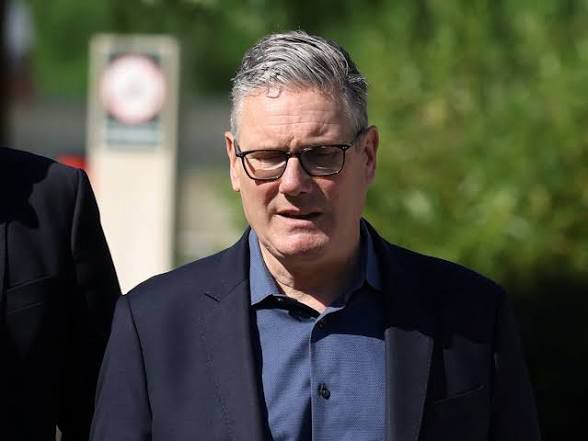
British Prime Minister Keir Starmer has revealed plans to step down after serving less than two years in office, bringing an end to a tenure marked by political setbacks, policy reversals and declining public support.
Speaking emotionally outside 10 Downing Street on Monday, Starmer said he had decided to relinquish his position as leader of the Labour Party, stressing that every major decision he made was guided by what he believed was in the best interest of the country.
READ MORE: Egypt Claim Historic First World Cup Victory with 3-1 Win Over New Zealand
Fighting back tears during his address, he stated that the process to elect a new Labour leader would begin in July. He also confirmed that he would continue serving as prime minister until a successor is chosen, with the transition expected to be completed before Parliament reconvenes after the summer break in September.
Starmer’s likely challenger, veteran Labour figure Andy Burnham, is expected to return to Westminster after securing victory in a crucial by-election last week, a development that strengthens his prospects of entering the leadership race.
The outgoing prime minister pledged to ensure a smooth transfer of power, promising to remain focused on his duties until the leadership contest is concluded.
His announcement comes after months of speculation surrounding his future. Despite repeated calls for him to resign and mounting pressure from within and outside his party, Starmer had maintained until recently that he intended to stay on and fight for his political survival.
His administration faced growing difficulties following a series of controversies, internal disputes and the resignation of several high-profile figures, all of which weakened his standing within the Labour Party.
With his departure, Britain is set to welcome its seventh prime minister in just ten years, highlighting a period of continued political instability.
The resignation also comes on the eve of the tenth anniversary of the Brexit referendum, a historic vote that led to the United Kingdom’s departure from the European Union and ushered in a succession of leadership changes.
Starmer is widely recognised for rebuilding Labour and leading the party to a convincing election victory in 2024, ending more than a decade of Conservative government.
However, his time in office was overshadowed by controversial decisions, including welfare reforms, debates over public spending and criticism of his defence policies.
One of the most damaging episodes of his premiership occurred in March when he faced intense backlash over the appointment of Peter Mandelson as Britain’s ambassador to Washington, a move that sparked controversy and intensified calls for his removal.
At the same time, Starmer struggled to contain the growing influence of the right-wing Reform UK party, whose strong performance in local elections earlier this year further eroded Labour’s political position.
In his farewell remarks, Starmer pledged his full support to whoever succeeds him, expressing confidence that the next leader would inherit a nation that is stronger and more equitable than the one he took charge of nearly two years ago.
About The Author