My Fellow Citizens,
Today, we mark another Democracy Day and celebrate the resilience, determination, and unity of the Nigerian people. For 27 consecutive years, beginning from May 29, 1999, our nation has sustained democratic governance. Nigerians have consistently chosen their leaders through elections, witnessed peaceful transfers of power, and settled political disputes through constitutional institutions rather than violence. Although our democratic journey remains a work in progress, it belongs to us, and we must continue to nurture and protect it.
As Ekiti and Osun States prepare for upcoming elections, I call on the Independent National Electoral Commission, security agencies, political parties, and all stakeholders to uphold the integrity of the electoral process. Free, fair, and peaceful elections are the foundation of public trust. Democracy weakens when confidence in the system is lost.
READ MORE: South Africa Deports 586 Nigerians Amid Immigration Crackdown, First Batch Arrives in Lagos
To the National Assembly, the Judiciary, the media, and civil society organisations, your role in safeguarding our democracy remains invaluable. Hold government accountable, challenge policies where necessary, but never lose faith in the promise of Nigeria.
To our youth, the future of this nation rests in your hands. Innovate here, invest your talents here, create opportunities here, and actively participate in shaping our democracy. Nations achieve greatness when citizens remain committed to solving their challenges rather than walking away from them.
I extend my appreciation to members of our armed forces, police, and intelligence agencies for their courage and dedication. I also thank our traditional rulers, religious leaders, and community stakeholders whose efforts continue to promote peace and national cohesion. Government alone cannot achieve lasting progress.
Today, we honour Nigerians who defended freedom and democratic values despite intimidation and oppression. We remember those who endured imprisonment, exile, persecution, and even paid the ultimate price to secure the liberties we enjoy today. Labour activists, journalists, students, professionals, women, political figures, and patriotic members of the armed forces all played significant roles in Nigeria’s democratic struggle.
While we celebrate this important milestone, our hearts remain with the children and teachers abducted in Oyo and Borno States. Their continued captivity has cast a shadow over this year’s celebration. Security remains fundamental to democratic governance, which is why our administration declared a security emergency and approved the recruitment of over 50,000 police officers alongside thousands of military personnel. The 2026 budget allocates a record N5.41 trillion to defence and security as part of our commitment to protecting Nigerians.
Our security operations have evolved from capacity-building exercises with international partners such as the United States, France, and other European allies to highly coordinated precision missions. In Arege, Borno State, security forces successfully disrupted a major ISWAP command structure. Terror-related fatalities have declined by 81 per cent since 2015, while more than 13,000 terrorists have been eliminated over the past year.
At the same time, we continue to offer pathways for rehabilitation and reintegration. Through Operation Safe Corridor, over 124,000 former fighters and their dependents have surrendered and embraced peace since 2023.
To those engaged in banditry, kidnapping, and terrorism, as well as those who finance such crimes, the message is clear: abandon your activities or face decisive action from the Nigerian State. The opportunity for surrender will not remain available indefinitely. Those who profit from violence against innocent citizens should expect no leniency.
As we confront these security challenges, we must reject attempts to divide us along ethnic or religious lines. Criminality has no tribe, region, or faith. Nigerians must stand together in the common interest of defeating insecurity and building a stronger nation.
June 12 remains one of the most significant dates in our national history. It symbolises the aspirations of Nigerians for unity, justice, and democratic governance. We remember Chief M.K.O. Abiola, whose electoral victory reflected a truly national mandate, and Alhaja Kudirat Abiola, whose courage remains an inspiration.
We also honour distinguished champions of democracy, including Chief Gani Fawehinmi, Chief Bola Ige, Chief Alfred Rewane, Pa Abraham Adesanya, Chief Anthony Enahoro, Alhaji Balarabe Musa, Commodore Dan Suleiman, Dr. Beko Ransome-Kuti, Frank Kokori, Arthur Nwankwo, Chima Ubani, Shehu Musa Yar’Adua, and numerous others whose sacrifices paved the way for democratic governance.
As beneficiaries of their struggles, we bear the responsibility of strengthening democratic institutions and ensuring that freedom, justice, accountability, and opportunity remain central to national development.
The events of June 12, 1993, demonstrated the possibility of a united Nigerian nation. While the heroes of that era secured political freedom, our task today is to secure economic freedom. Democracy must produce tangible benefits through jobs, prosperity, business growth, agricultural productivity, and improved living standards.
The reforms introduced by this administration were not undertaken because they were easy, but because they were necessary. Three years ago, Nigeria faced severe fiscal pressures, declining investor confidence, and significant economic uncertainty. We chose the path of reform to lay the foundation for long-term prosperity.
Since 2023, these reforms have improved economic stability and strengthened confidence in public institutions. Federation revenues have increased, enabling state and local governments to invest more in infrastructure, healthcare, education, and security. Transparency has improved, leakages have been reduced, and public resources are being directed toward critical national priorities.
Investor interest has returned across agriculture, energy, manufacturing, mining, transportation, technology, and the creative economy. Domestic refining capacity has expanded, improving energy security and reducing dependence on imported petroleum products.
When this administration assumed office in 2023, the power sector faced serious challenges, including inadequate generation, unreliable gas supply, weak transmission networks, massive distribution losses, and a metering shortfall exceeding four million units. Legacy debts further weakened the sector, limiting its ability to deliver reliable electricity.
To address these issues, we enacted the Electricity Act, empowering states to participate more actively in electricity generation, transmission, and distribution. The Presidential Power Sector Task Force is working to close the metering gap and has been authorised to raise a N4 trillion bond to clear verified debts. Through partnerships with the World Bank and the African Development Bank, the Rural Electrification Agency is expanding off-grid and mini-grid solutions to underserved communities, universities, hospitals, and markets.
Reliable electricity is a right every Nigerian deserves, and we remain committed to making it a reality.
Across the nation, major infrastructure projects are improving connectivity, expanding economic opportunities, and supporting job creation. The National Agricultural Development Fund is rolling out 10,000 tractors over a five-year period, while more than 1,000 small and medium-sized businesses have obtained export certification. Non-oil exports grew by 21 per cent in the last year alone.
Nevertheless, we recognise that many Nigerians continue to face economic challenges. Our focus remains on controlling inflation, boosting food production, creating employment opportunities, improving living conditions, and laying the groundwork for sustainable economic growth.
Nigeria is transitioning from instability to greater economic certainty. The next stage is to accelerate development and ensure that progress reaches every household, community, and region. Democracy must deliver practical benefits that citizens can experience in their daily lives.
Recognising the importance of effective governance at the grassroots, our administration has championed financial autonomy for all 774 local government councils. Weak local governance has contributed to many of the challenges confronting our nation, including insecurity. Through the Renewed Hope Agenda, we are working to ensure that governance delivers meaningful results to all Nigerians.
Every generation faces a defining mission. Our founding fathers secured independence. The heroes of June 12 secured democracy. Our generation must secure prosperity.
Let us move forward together with confidence, rejecting division and pessimism while embracing unity, optimism, and national purpose. Let us build a country where diversity remains a source of strength, justice is accessible, freedoms are protected, and opportunities are available to all.
Among the great builders of modern democratic Nigeria, General Shehu Musa Yar’Adua occupies a special place. In recognition of his contributions, the Federal Government has approved the renaming of the Institute of Petroleum Studies in Kaduna as the General Shehu Musa Yar’Adua University of Geological Sciences and Engineering Technology.
I am also pleased to announce national honours for several Nigerians who made significant sacrifices during the struggle for democracy. These individuals endured persecution, detention, exile, and hardship so that future generations could enjoy democratic freedoms.
The complete honours list will be formally published in the coming days.
My fellow Nigerians, many doubted that democracy could endure in a country as diverse as ours. Twenty-seven years later, our diversity remains one of our greatest strengths. The journey ahead may be challenging, but our history teaches us that Nigerians are resilient. We may face difficulties, but we remain unbroken.
Let us renew our commitment to the ideals for which our heroes fought and sacrificed. Let us ensure that their efforts were not in vain and that government of the people, by the people, and for the people continues to thrive in our land.
May God bless the heroes of our democracy.
May God bless the Federal Republic of Nigeria.
And may God continue to bless us all.
Happy Democracy Day.
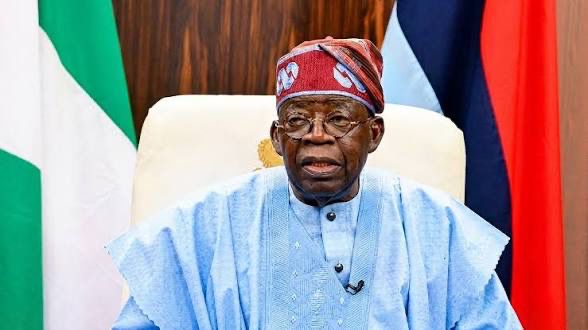
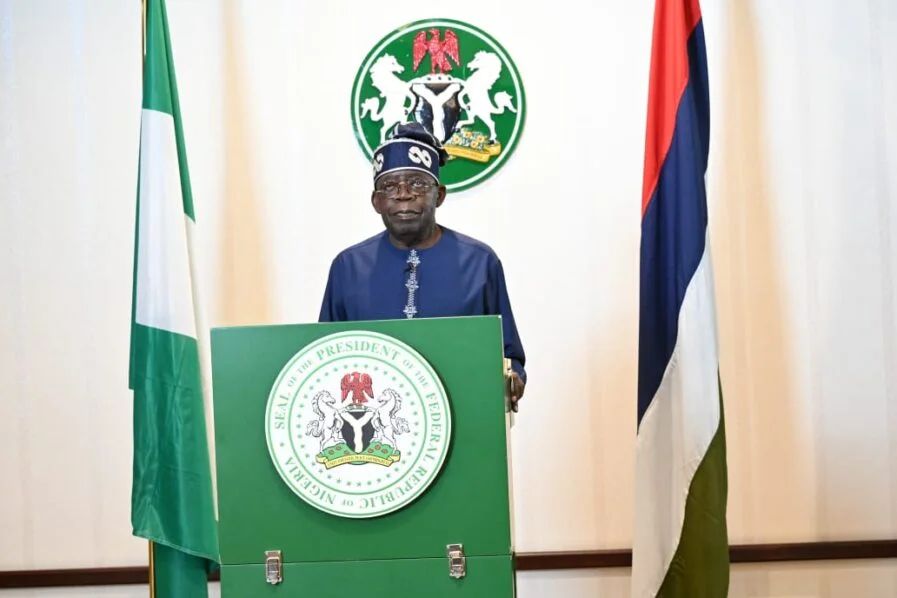
Bola Ahmed Tinubu, GCFR
President and Commander-in-Chief of the Armed Forces
Federal Republic of Nigeria
About The Author