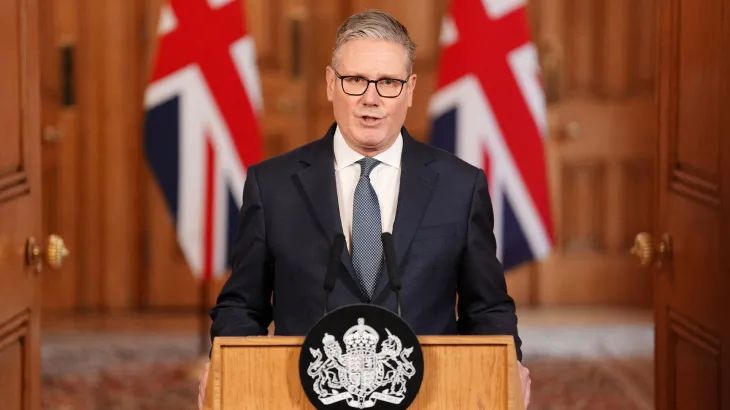
British Prime Minister Keir Starmer has unveiled plans to prohibit children under the age of 16 from accessing social media, arguing that the platforms are negatively affecting young people’s well-being and exposing them to harmful content.
Speaking on Monday, Starmer said the government intends to introduce legislation that will prevent anyone below 16 from using major social networking platforms, describing many of these services as addictive and potentially damaging to children.
READ MORE: DHQ Team Pays Tribute to Late Major General Rabe Abubakar, Visits Family and Katsina Government
The proposed restrictions would cover platforms such as Snapchat, TikTok, YouTube, Instagram, Facebook and X, while messaging applications like WhatsApp would remain exempt.
According to the prime minister, the government hopes to secure parliamentary approval for the measure before the end of December, with implementation expected in spring next year.
Starmer also revealed plans to extend online safety measures to gaming and live-streaming services, promising what he described as “world-leading” protections for young users.
In a statement, the government said it is exploring additional safeguards for those under 18, including overnight social media curfews and measures to interrupt endless scrolling features. Further details are expected to be released in July.
The UK’s proposed crackdown draws inspiration from Australia, which became the first country to ban social media access for under-16s when it introduced similar legislation in December.
The announcement follows a government consultation that involved British teenagers testing social media restrictions and app usage limits.
Reacting to the proposal, a YouTube spokesperson cautioned that a blanket ban could drive young users toward platforms with fewer safety protections.
Starmer also highlighted concerns about gaming and livestreaming services that allow children to interact with unknown adults online.
“In everyday life, parents would not allow their children to be paired with strangers without supervision. The same principle should apply online,” he said, while indicating that more details on the proposed measures would be announced later.
The UK’s move comes amid a growing international trend toward stricter regulation of children’s online activity. Last week, Canada introduced legislation aimed at preventing under-16s from opening social media accounts while also requiring artificial intelligence chatbot providers to limit harmful content generation.
The proposed Digital Safety Act places Canada among a number of countries tightening controls on digital platforms over concerns about child safety.
Indonesia began enforcing a social media age restriction for users under 16 in March, while several European nations have expressed support for similar policies.
The British government’s public consultation on the issue, which concluded in late May, received approximately 116,000 submissions, making it one of the largest consultations in the country’s history.
Survey results showed strong public backing for tougher rules, with more than 83 per cent of participating parents saying the dangers of social media outweigh its benefits for children. Additionally, 91 per cent supported setting the minimum age for social media use at 16.
The proposal follows another recent government initiative requiring technology companies to strengthen protections against the sharing of nude images involving minors.
Britain’s Home Office recently directed major technology firms, including Apple and Google, to introduce safety tools within three months to prevent children from creating, sending, or accessing explicit images on smartphones and tablets.
Officials warned that failure to comply could result in legislation mandating the activation of such protections.
Starmer’s Labour administration said technology companies have an ethical obligation to shield children from online exploitation, abuse, coercion and sextortion.
The government added that planned legal changes would also help restrict minors’ access to pornography and make it harder for predators to target children online.
Data from the Internet Watch Foundation cited by officials indicated that 91 per cent of child sexual abuse reports recorded online in 2024 involved self-generated content created by children themselves.
About The Author