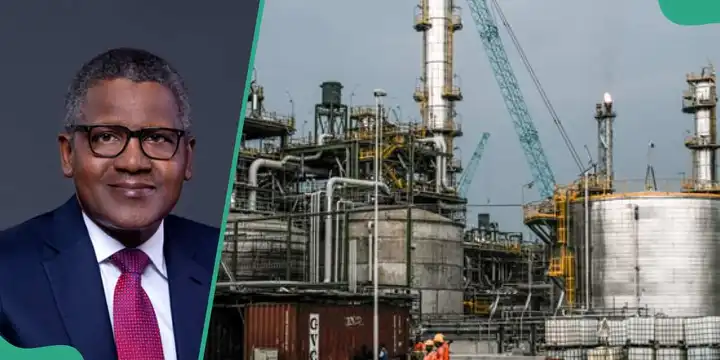
The Chairman of BUA Cement Plc, Abdul Samad Rabiu
The Chairman of BUA Cement Plc, Abdul Samad Rabiu, has attributed the sharp increase in cement prices across Nigeria to soaring energy and transportation costs.
Rabiu made the remarks during the company’s 10th Annual General Meeting held in Abuja on Wednesday.
READ MORE: Fayose’s son, Assembly speaker, deputy secure APC tickets for 2027 polls
A survey conducted across various parts of the country showed that the price of a 50kg bag of cement, which sold for between N4,700 and N5,200 in April 2023, now ranges from about N11,600 to N12,500 depending on location and proximity to production plants.
According to Rabiu, cement manufacturers are grappling with enormous expenses from self-generated electricity and the rising cost of diesel used in transporting products from factories to distribution centres.
“We are making efforts to keep cement affordable, but there are challenges outside our control. We spend heavily on power generation, while diesel prices have increased significantly,” he said.
He also linked the surge in fuel prices to tensions in the Middle East and noted that the depreciation of the naira had raised the cost of imported chemicals used in cement production.
Rabiu, however, expressed support for the Central Bank of Nigeria’s exchange rate unification policy, saying it had removed distortions in the foreign exchange market and improved access to forex for businesses.
“The naira unification policy has affected the value of the currency, but it is a positive move because it eliminated market distortions. Businesses can now access foreign exchange more transparently and plan effectively,” he added.
Speaking during the post-AGM briefing, the company’s Managing Director, Yusuf Binji, explained that cement prices largely reflect rising production costs, especially expenses tied to energy and transportation.
He pointed out that the sharp depreciation of the naira over the last three years had significantly impacted manufacturing operations.
Binji noted that before June 2023, the naira exchanged at around N406 to N461 per dollar, but later weakened to nearly N1,600 to the dollar, greatly increasing operational costs for manufacturers.
According to him, cement production is highly energy-intensive, with roughly 60 per cent of production costs linked to energy consumption.
He cited one of the company’s Edo State plants, where monthly gas bills from the Nigerian Gas Marketing Company reportedly jumped from about N4 billion to N16 billion.
Binji also disclosed that diesel prices delivered to the company’s factories rose from around N900 per litre in March to nearly N1,850 per litre within a short period.
Despite the economic pressures, he expressed optimism that the company would continue expanding through innovation and responsible corporate practices.
The company also announced a dividend payout of N10 per 50 kobo ordinary share, amounting to N338.643 billion from its 2025 profit after tax of N356 billion.
About The Author