Funke Akindele At The Center Of Industry Controversy
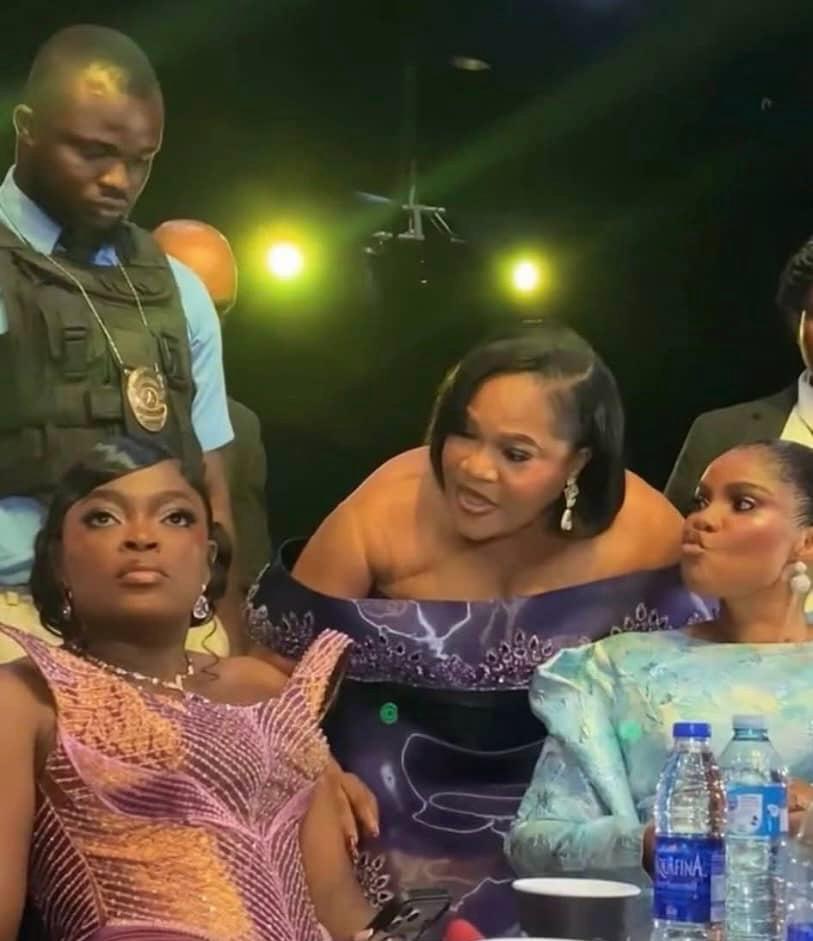
Is Toyin Abraham’s gesture merely eye-service, especially if she and Funke Akindele are not friends?
Let me be clear.
Unless two women are in conflict over something deeply personal—such as a shared partner, a tragic incident involving a child, or a deliberate attempt to ruin one another’s livelihood—there is nothing in Yoruba culture that justifies the kind of public embarrassment we witnessed from Funke Akindele. None at all.
As always, it helps to look back, because history preserves the truth.
In 2011, during a major crisis in the Yoruba film industry, the once-unified Association of Nigerian Theatre Arts Practitioners (ANTP) split, giving rise to Theatre Arts and Motion Pictures Practitioners Association of Nigeria. This division created a rift along generational and ideological lines.
Many veteran actors, trained under the legendary Hubert Ogunde, remained loyal to ANTP, holding firmly to their roots. In response, younger and more commercially active filmmakers—who were producing the majority of films at the time—collectively sidelined these veterans, excluding them from new projects.
READ MORE: Adebola Williams Marks Milestone 40th Birthday With Grateful Thanksgiving Service
Icons such as Lere Paimo and Adebayo Salami, foundational figures in the industry, were among those affected.
Yet, despite this professional divide, whenever younger actors encountered these elders in public at events, premieres, or gathering they still showed respect.
The elders, even if hurt or resentful, accepted these gestures. Why? Because the conflict was professional, not personal. It was never an excuse for public disrespect or humiliation.
Fast forward to a more recent example:
In 2025, when director Afeez Owo made comments that upset actress Wumi Toriola, tensions escalated into the public sphere. However, when they later met on set and she extended a greeting and a gesture of peace, he accepted it. That is the standard upheld in Yoruba culture.
Therefore, to claim that Toyin Abraham’s greeting was insincere simply because they may not be close is misguided. By that reasoning, political figures like Bola Ahmed Tinubu and Olusegun Obasanjo should ignore one another at public events due to political differences.
As a Yoruba man speaking to Yoruba actors—where culture and tradition hold deep significance—this must be said:
You do not have to be friends to be civil.
You do not have to agree to show respect.
You do not have to be close to act with dignity.
That is not eye-service. That is ìwàcharacter. And without it, we risk losing the very essence of who we are
About The Author