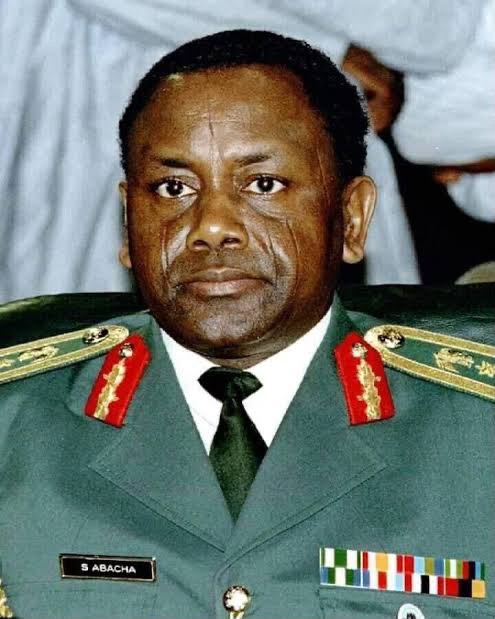
Major Hamza Al-Mustapha (retd.), the former Chief Security Officer to late Head of State General Sani Abacha, has rejected the account of Abacha’s final moments presented by retired Department of State Services (DSS) officer Dennis Amachree.
Al-Mustapha described the claims as untrue and called on Nigerians to disregard them.
READ MORE: Former UNILAG Vice-Chancellor Takes Over as NUC Governing Board Chairman
He made the remarks while speaking to journalists on the sidelines of the 3rd General Hassan Usman Katsina Memorial Conference held at Arewa House in Kaduna on Saturday.
His response comes amid renewed public interest in Amachree’s memoir, The Shadow Warrior, in which the retired intelligence officer detailed his version of the events leading to Abacha’s death on June 8, 1998.
Refuting the narrative, Al-Mustapha insisted that the account was fabricated and did not accurately reflect what transpired.
“The boy was asked by others to write those lies. I have all the CCTV footage of what happened in my custody, so what he said is not true,” Al-Mustapha stated.
The retired army officer maintained that he possesses evidence capable of disproving the claims contained in the memoir, although he did not provide further details about the alleged footage or indicate whether it would be released publicly.
He also urged Nigerians not to accept the allegations, arguing that it is unfair to make accusations against someone who is no longer alive to respond.
“Just ignore his lies. It’s bad to say such things about someone who is dead,” he added.
General Abacha came to power following the military coup of November 17, 1993, and governed Nigeria until his sudden death at the Presidential Villa in Abuja on June 8, 1998.
At the time, the Federal Government announced that the military ruler died after a brief illness. However, the circumstances surrounding his death have continued to spark debate and remain one of the most disputed episodes in Nigeria’s political history.
Over the years, former military officers, intelligence officials, diplomats, and political figures have offered differing accounts through interviews and publications, leading to conflicting narratives about Abacha’s final hours.
Amachree, a retired Assistant Director of the DSS who served during the Abacha administration, recently reignited the controversy by sharing his version of events in The Shadow Warrior.
The memoir has since attracted fresh reactions from several former government officials who served under the late military leader.
Al-Mustapha, regarded as one of Abacha’s closest associates, has consistently challenged accounts that he believes misrepresent the former Head of State or distort events from that era.
The former CSO has also remained a controversial figure. After Abacha’s death, he was arrested in 1999 and prosecuted over the attempted murder of publisher Alex Ibru and the killing of Kudirat Abiola, wife of the presumed winner of the June 12, 1993 presidential election, Chief Moshood Abiola.
He spent more than a decade in detention before the Court of Appeal acquitted and discharged him in 2013.
Since his release, Al-Mustapha has continued to defend the Abacha administration, maintaining that many allegations against the late military government and its officials were politically driven or lacked credible evidence.
About The Author