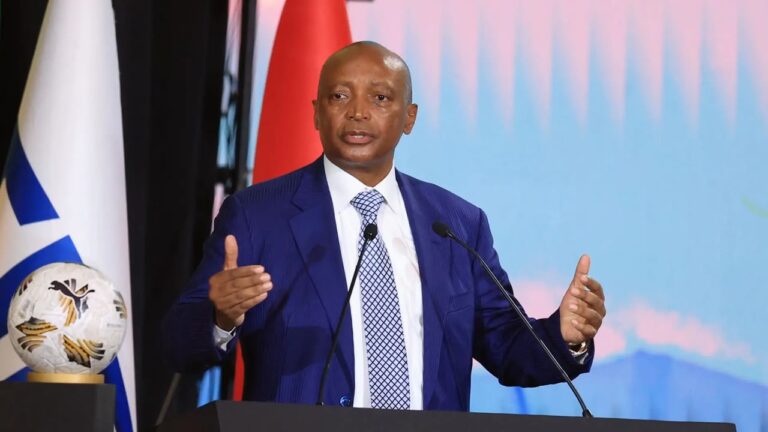
Dr Tunji Alausa, the Minister of State for Health and Social Welfare.
The Federal Government on Wednesday prohibited recipients of honorary doctorates from adding the “Dr” prefix to their names in any official, academic, or professional setting.
Authorities stated that adopting the title in such cases amounts to misrepresenting academic qualifications and will now be treated as academic fraud, attracting legal and reputational penalties.
READ MORE: ECOWAS orders inquiry into xenophobic violence in South Africa
Minister of Education, Tunji Alausa, announced the directive at the Presidential Villa in Abuja while briefing journalists on decisions approved by the Federal Executive Council (FEC) but not disclosed after its April 30 meeting.
Alausa, alongside Minister of State for Education Suwaiba Ahmad, said the FEC had endorsed a standardised policy governing the award and usage of honorary degrees across Nigerian universities.
He explained that the move aims to curb what he described as long-standing abuse of honorary titles for political favour and financial benefit, and to rebuild trust in academic honours.
According to him, recipients must now place the honorary designation after their names rather than using “Dr” as a prefix. Examples include formats such as “Chief Louis Clark, D.Lit. (Honoris Causa)” or “Mrs Miriam Adamu, LL.D. Hons.”
The minister stressed that presenting honorary awards as earned doctorates will be classified as fraud.
The new guidelines also limit honorary degrees to four categories: Doctor of Laws (LL.D), Doctor of Letters (D.Lit), Doctor of Science (D.Sc), and Doctor of Humanities (D.Arts).
In addition, institutions without active PhD programmes are no longer permitted to confer honorary degrees, a move aimed at curbing the rise of newer universities granting such honours without established postgraduate research structures.
Alausa added that all honorary awards must clearly state “honorary” or “Honoris Causa” on certificates and in all references.
The policy follows years of criticism within Nigeria’s academic community over the perceived commercialisation of honorary degrees, often linked to wealthy donors or public officials.
Efforts to address the issue date back to the 2012 Keffi Declaration by the Association of Vice-Chancellors of Nigerian Universities, though it lacked legal backing.
With FEC approval, the policy now carries full executive authority. The National Universities Commission and the Ministry of Education are expected to enforce compliance, issue directives to universities, and monitor convocation ceremonies.
The government also plans to publish an annual list of recognised honorary degree recipients and work with the media to discourage misuse of academic titles.
About The Author