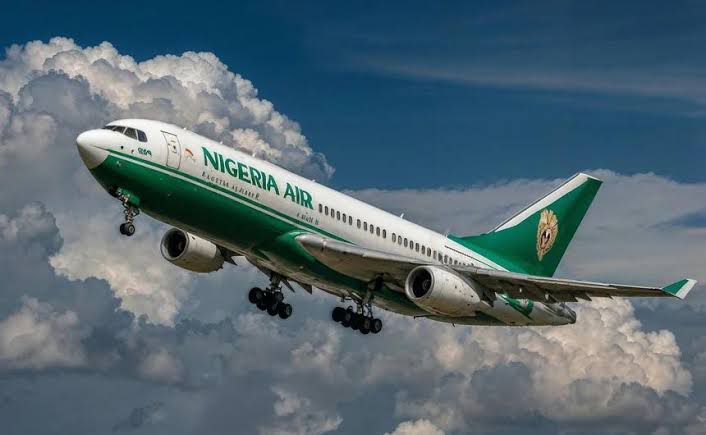
There are growing signals that local carriers in Nigeria could suspend operations starting Thursday, April 30, 2026, as operators decry the soaring cost of aviation fuel, describing it as intolerable and unsustainable. The development has sparked concerns over major travel disruptions across the country.
Sources within the industry reveal that after unsuccessful discussions with the Federal Government and fuel suppliers, airlines may have no alternative but to ground their fleets.
READ MORE: Glo highlights seamless connectivity in two new advert campaigns
The potential shutdown follows repeated protests by operators over the sharp increase in the price of Jet A1, which has climbed by more than 300 per cent since February, significantly driving up operational expenses.
Travellers who depend on domestic flights for business and urgent trips are now facing uncertainty.
In an effort to prevent the looming crisis, the Minister of Aviation and Aerospace Development, Festus Keyamo, held talks last week in Abuja with airline operators and fuel marketers. However, the meeting reportedly ended without resolution, as operators maintained their position, insisting on concrete action.
After the two-day engagement, the minister announced a 30 per cent cut in aviation-related levies to reduce the financial strain on airlines. While operators acknowledged the move, they argued that it does not address the core issue.
Speaking during the meeting, Vice President of the Airline Operators of Nigeria, Allen Onyema, appreciated the government’s support but stressed that fuel marketers must justify the steep rise in prices.
He noted that although the government has provided significant backing to the aviation sector, suppliers must explain the drastic increase, especially when local production costs remain relatively lower.
At the close of the meeting, Onyema issued a strong warning, giving a seven-day deadline from midnight last Thursday for decisive action. He linked the price surge partly to global tensions, including the US-Iran conflict, but argued that the local increase is disproportionate to international trends.
He warned that airlines may be forced to stop operations within days—not out of choice, but due to the inability to secure fuel at sustainable rates.
Providing further details, Onyema said fuel prices have jumped from about N900 per litre before the crisis to between N2,700 and N2,900, with some suppliers charging as much as N3,500 per litre.
He added that airlines are now operating largely to cover fuel expenses, noting that safety cannot be compromised under such conditions.
Despite rumours of outstanding debts, senior airline officials, who spoke anonymously due to the sensitivity of the matter, insisted that operators have settled their obligations with key aviation agencies, including FAAN and NAMA.
In a formal appeal dated April 21 and signed by AON President Abdulmunaf Sarina, the Airline Operators of Nigeria requested additional government intervention. The group called for a temporary suspension of aviation taxes, levies, and charges for at least six months.
They warned that the unprecedented fuel price surge threatens not only airline operations but also employment and the overall stability of the aviation industry.
Among other proposals, the operators suggested introducing a fuel surcharge exempt from taxation—a common practice globally—to help cushion rising costs. They also urged authorities to compel fuel marketers to issue credit adjustments to airlines affected by what they described as excessive pricing.
Additionally, the group recommended setting up a tax reform committee to review existing charges and align them with international standards.
As the deadline draws closer, uncertainty continues to cloud Nigeria’s aviation sector. Another airline executive, who declined to be named, cautioned that the threat of a shutdown remains imminent, stressing that flights could be halted by Thursday if no urgent measures are taken.
About The Author