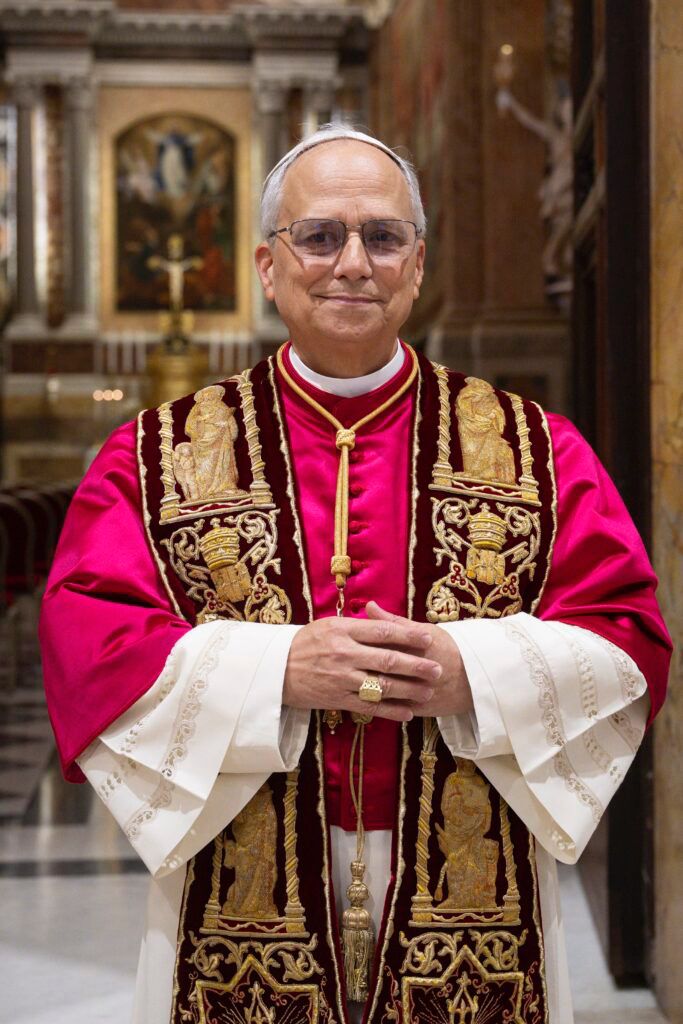
Pope Leo XIV is set to commence his first significant overseas tour on Monday, embarking on an 11-day visit to Algeria, Cameroon, Angola, and Equatorial Guinea.
The trip marks his first major international journey since assuming the papacy last year.
During the tour, the US-born pontiff will address a wide range of issues, including interfaith relations with Islam, peacebuilding efforts, inequality, and human rights. He is expected to travel over 18,000 kilometres (11,000 miles) across the continent.
Since becoming leader of the world’s 1.4 billion Catholics in May, the 70-year-old will deliver 11 speeches, celebrate seven masses, and visit several key locations before concluding the trip on April 23.
READ MORE :TUC warns petrol may hit ₦2,000 per litre without quick action
Given the current global climate—shaped by tensions in the Middle East and the resulting energy crisis—his messages and engagements are likely to draw heightened global attention.
This will be Leo’s third trip outside Italy, following visits to Turkey and Lebanon last year, and Monaco in March.
Algeria (April 13–15)
Leo will make history as the first pope to visit Algeria, a predominantly Muslim country where Islam is the state religion.
His itinerary includes a visit to the Great Mosque of Algiers and a meeting with President Abdelmadjid Tebboune.
He will also travel to Annaba to meet members of the Augustinian order, to which he belongs, in the city historically associated with Saint Augustine.
Cameroon (April 15–18) – Focus on peace
In Cameroon, where Christians form the majority, the pope is expected to emphasise peace and reconciliation, particularly in the conflict-ridden English-speaking northwest region.
A major highlight of his visit will be a mass and address in Bamenda, the epicentre of the unrest, under tight security. The Catholic Church has played a key mediating role in the crisis.
Leo will also tour several Church-run institutions, including hospitals, schools, and charitable centres. About 37 percent of Cameroon’s population of 30 million identify as Catholic.
He is also scheduled to meet President Paul Biya, one of the world’s longest-serving leaders, who has faced criticism from sections of the clergy over his prolonged rule.
Angola (April 18–21)
In Angola, the pope is expected to focus on social justice issues. Despite its vast oil and mineral wealth, the country continues to struggle with widespread poverty and the legacy of a civil war that ended in 2002.
Leo is likely to call for fairer distribution of national resources and stronger efforts to combat corruption.
While many Angolan Catholics—who make up about 44 percent of the population—are eager for his visit, some citizens have expressed concerns over the cost of hosting the trip.
His itinerary includes stops in Luanda, where stark contrasts exist between affluent districts and sprawling slums, as well as a visit to Muxima, a historic religious site located along a former slave trade route.
Equatorial Guinea (April 21–23) –
A delicate mission
The final leg of the tour will take the pope to Equatorial Guinea, where President Teodoro Obiang Nguema Mbasogo has ruled since 1979.
With about 80 percent of the population identifying as Catholic, expectations are high, though the visit presents a diplomatic challenge. Leo is expected to balance support for local Catholics with careful messaging that does not appear to endorse the country’s authoritarian leadership.
Observers anticipate that he will speak on issues such as human rights and social justice.
Ahead of his arrival, preparations in Malabo have been visible, with large images of the pontiff displayed across the city and state media broadcasting promotional content about the visit.
AFP
About The Author