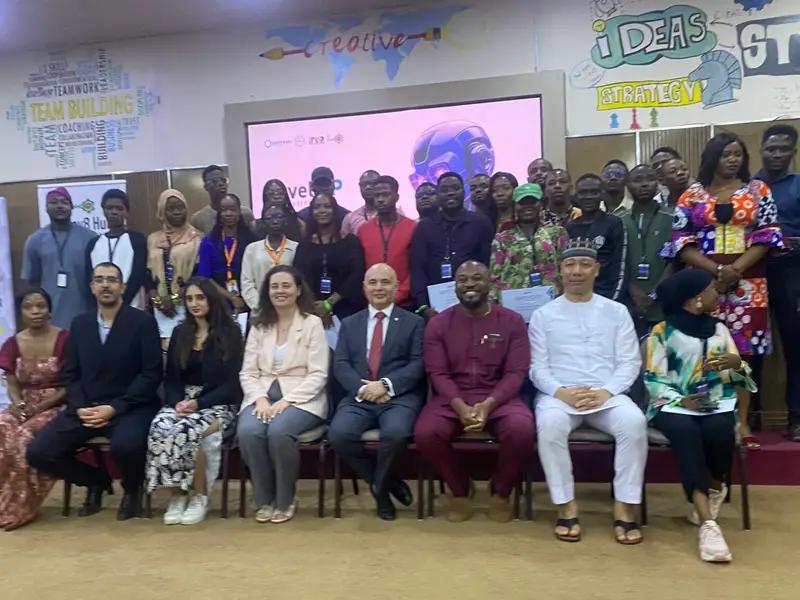
The Israeli government has expressed its commitment to expanding cooperation with Nigeria in the field of Artificial Intelligence (AI), with a focus on fostering innovation, entrepreneurship, and technology-driven solutions.
This was disclosed by the Israeli Ambassador to Nigeria, Michael Freeman, during the closing ceremony of the inaugural Innovation Week organised by the Israeli Embassy in Abuja for participants of the Innovation Fellowship for Aspiring Inventors and Researchers (i-FAIR) programme.
READ MORE: Police Thwart Alleged Child Trafficking Operation in Akwa Ibom, Arrest Two
The week-long initiative, which commenced on June 1 under the theme, “From Ideas to Impact: Building AI-Enabled Ventures for the Future,” was designed to equip aspiring innovators, startup founders, researchers, and entrepreneurs with practical skills in innovation and AI-powered business development.
Speaking at the event, Freeman emphasized that Artificial Intelligence should not be viewed solely as a threat to jobs. Rather, he described it as a powerful tool capable of creating employment opportunities, improving productivity, and enhancing the quality of products and services across industries.
According to him, increasing the participation of Nigerians and Africans in the AI ecosystem would help ensure that the technology reflects local perspectives and addresses the continent’s unique needs.
He noted that the programme was intended to amplify African contributions to AI development, making the technology more relevant and beneficial to communities across the continent.
The ambassador revealed that the initiative marks Israel’s first major AI-focused engagement of its kind, following a strategic decision by the Israeli government to position itself among the world’s leading AI nations in the coming years.
Freeman said Israel is eager to share its expertise and technological advancements with Nigeria through platforms such as the i-FAIR programme and other collaborative initiatives.
He explained that the partnership aims to build AI capacity, strengthen innovation ecosystems, and create opportunities that will benefit both Nigerians and Israelis.
According to him, deeper cooperation between the two countries is essential to unlocking AI’s full potential in enhancing human productivity, streamlining workplace operations, and driving creativity and innovation.
Also speaking at the event, Dor Yaacov, an AI lead facilitator with Unistream, highlighted the transformative role AI can play in helping Africans develop practical and sustainable solutions to local challenges.
He praised the participants for demonstrating ingenuity and a strong commitment to solving societal problems through technology.
Yaacov observed that many of the ideas presented during the programme focused on pressing issues in sectors such as education, healthcare, agriculture, sustainability, security, and community development.
He expressed confidence that Nigerian entrepreneurs possess the potential to develop AI-driven innovations capable of addressing not only domestic challenges but also global problems affecting millions of people.
Reflecting on the experience, he described the participants as talented, creative, and solution-oriented individuals determined to make meaningful impacts within their communities.
The event concluded with presentations by participating teams showcasing their AI-based projects and innovations, alongside knowledge-sharing sessions on practical AI applications. Certificates were also presented to participants in recognition of their successful completion of the programme.
NAN
About The Author