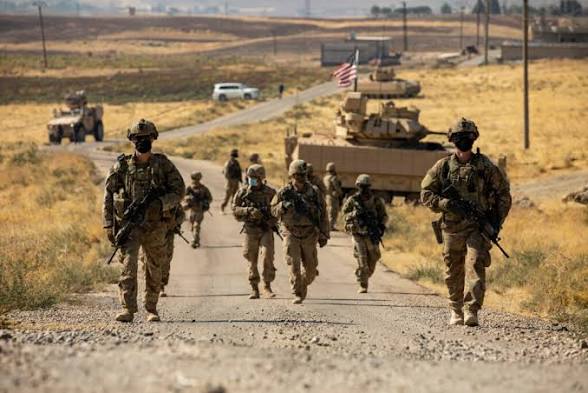
The Commander of the United States Africa Command (AFRICOM), General Dagvin Anderson, has confirmed that the United States has withdrawn a significant number of the troops deployed to support a recent counterterrorism mission in Nigeria, although security cooperation and intelligence sharing between both countries remain ongoing.
The US military presence in Nigeria began in early February after Washington and Abuja reached an agreement following an American strike on suspected ISIS militants. At the time, US President Donald Trump said the militants were targeting Christian communities, prompting closer collaboration between the two countries to combat terrorist threats.
READ MORE: FG clears N39.6bn outstanding pension obligations
By the middle of February, reports indicated that roughly 200 US troops had been stationed in Nigeria’s North-east. The deployment sparked public debate over the role of foreign forces in the country’s internal security operations. In response, Nigerian military authorities maintained that the US personnel would not engage in frontline combat.
Defence Headquarters spokesperson, Samaila Uba, explained that the American troops were assigned to provide intelligence support, military training, logistics assistance and strategic consultations aimed at tackling terrorism and other cross-border security challenges.
Despite those assurances, the US troops later took part in a joint operation with Nigerian forces that resulted in the killing of a senior commander of the Islamic State West Africa Province (ISWAP), along with several other terrorists operating in the North-east. Their activities were believed to have been concentrated mainly in Borno State and other insurgency-affected areas within the Lake Chad Basin.
Anderson confirms troop drawdown
Speaking during a virtual press briefing on Thursday after the 2026 African Chiefs of Defence Conference held in Luanda, Angola, General Anderson revealed that the temporary deployment had largely come to an end.
“We have withdrawn much of our forces that were just there for that operation,” he said.
He added that the US remains committed to supporting Nigeria through intelligence sharing and other forms of cooperation requested by the Nigerian government.
“The partnership Nigeria requested continues, particularly in intelligence sharing and providing the understanding needed to address ongoing security threats,” Anderson stated.
The AFRICOM chief did not disclose how many troops had been withdrawn, when the redeployment occurred, or the exact locations where they had operated within Nigeria.
As of the time of the announcement, neither the Nigerian military nor the Federal Government had officially commented on the reported withdrawal. AFRICOM had also not issued a separate public statement on the troop redeployment.
Highlighting Washington’s broader strategy of supporting African-led security initiatives, Anderson described Nigeria as an example of effective military cooperation.
He noted that the joint operation enabled the US to contribute specialised capabilities that helped eliminate the second-highest-ranking ISIS (Daesh) leader, an individual believed to have overseen the group’s global operations, propaganda activities and recruitment efforts.
According to him, the operation carried out in the Lake Chad Basin significantly disrupted not only ISIS activities within the region but also weakened elements of the group’s international network.
The 2026 African Chiefs of Defence Conference attracted military leaders from 35 African nations, senior US defence officials, representatives of government institutions and private-sector organisations. Discussions centred on intelligence cooperation, innovation, counterterrorism strategies, maritime security and the role of security in driving economic growth across the continent.
About The Author