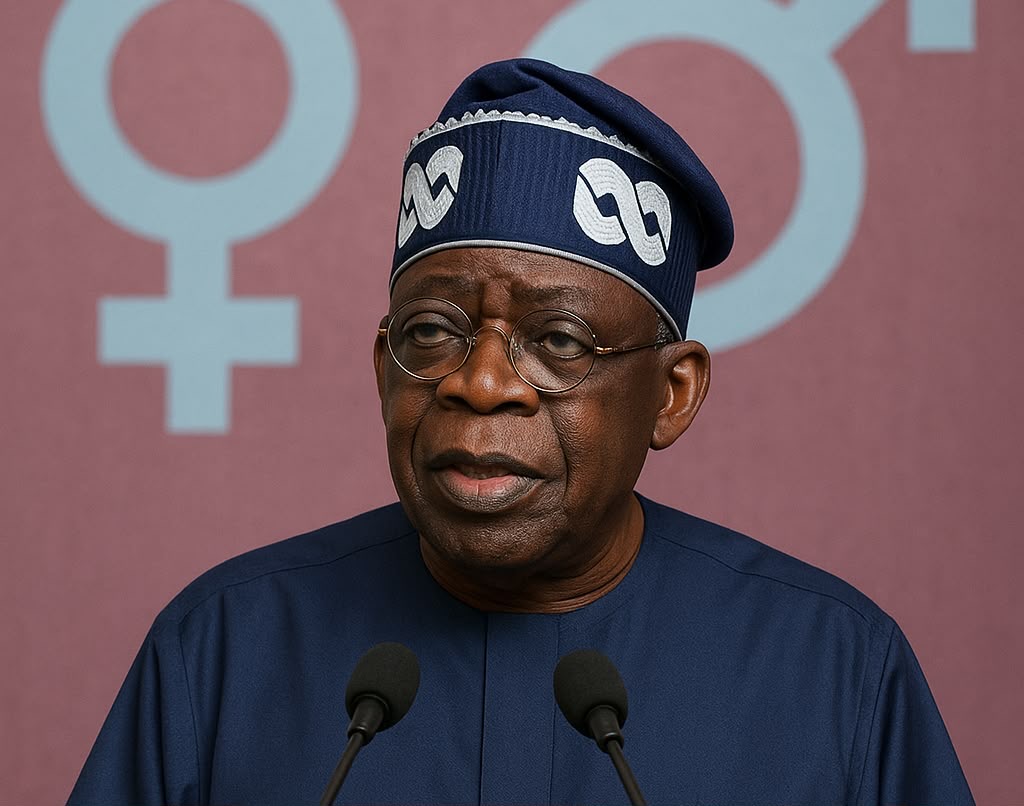
Nigeria’s Permanent Representative to the United Nations, Ambassador Jimoh Ibrahim, has announced that President Bola Tinubu will participate in the 81st session of the United Nations General Assembly (UNGA), scheduled to take place in New York, United States, this September.
A source familiar with the preparations also indicated that President Tinubu could have an informal interaction with United States President Donald Trump during the gathering, as both leaders are expected to be seated in close proximity in the front row of the General Assembly chamber.
READ MORE: FG Approves $11.5 Per Barrel Tax Incentive for Shell to Drive $20bn Deepwater Investment
Ambassador Ibrahim disclosed this while speaking with State House correspondents after a meeting with President Tinubu at the Presidential Villa in Abuja on Wednesday.
The envoy had earlier visited the President on Tuesday before returning the following day to conclude discussions.
According to Ibrahim, President Tinubu has accepted the invitation to attend the annual global summit and will address world leaders on Nigeria’s progress, particularly the achievements of his administration’s reform agenda.
“The President has agreed to be present at the United Nations General Assembly. He is expected to speak on Nigeria’s reform successes, and the address has been scheduled for September,” Ibrahim said.
He added that the President’s speech is expected to begin at approximately 10:45 a.m. in New York, which corresponds to about 3:45 p.m. in Nigeria, allowing citizens to watch the address live.
Responding to questions about a possible meeting between Tinubu and Trump, Ibrahim said no formal engagement had been confirmed. However, he noted that the Nigerian leader would be seated very close to the American President during the opening session.
“I cannot say there will be an official meeting, but I can confirm that President Tinubu will occupy a front-row seat only a few places away from President Donald Trump,” he explained.
Although no bilateral talks have been announced, their seating arrangement could provide an opportunity for the two leaders, who have not previously met publicly, to exchange greetings during the summit.
Beyond his main address, Tinubu is also expected to participate in several high-level side events focusing on energy and power generation, education, and healthcare management. Ibrahim noted that the President’s itinerary was carefully planned to avoid unnecessary congestion.
The ambassador further revealed that discussions with Tinubu also covered regional security, particularly the challenge of porous borders across West Africa.
According to him, the President reaffirmed his commitment to strengthening border security through collaboration with the United Nations. Nigeria intends to support the development of a regional border policing framework aimed at improving security and enhancing peacekeeping efforts across West Africa.
Ibrahim said he would brief the United Nations on Nigeria’s proposal to use the region as a model for border policing initiatives.
He also announced that, in his capacity as Chairman of the UN Budget Committee, he would present the organisation’s proposed 2027 budget during the General Assembly session, a responsibility that places Nigeria at the centre of one of the UN’s most important annual exercises.
Tinubu’s appearance at this year’s General Assembly will mark his return to the global gathering after missing the previous two sessions.
In 2024, the President opted to remain in Nigeria to oversee domestic affairs following severe flooding that affected several states. Vice President Kashim Shettima represented the country and delivered Nigeria’s official statement at the 79th UNGA.
Shettima also led Nigeria’s delegation to the 80th session in 2025 on behalf of the President.
During that address, delivered by the Vice President, Tinubu argued that the credibility of the United Nations was being weakened by the gap between its commitments and actual implementation. He also highlighted Nigeria’s economic reform programme as a potential example for other developing nations.
Meanwhile, on October 31, 2025, President Donald Trump redesignated Nigeria as a “Country of Particular Concern” over the persecution of Christians by violent Islamist groups. The White House stated that the United States remained prepared to support efforts to protect affected communities.
Trump also posted on social media that Christianity faced a serious threat in Nigeria, alleging that thousands of Christians had been killed by extremist groups. The designation prompted concerns among analysts that it could eventually result in sanctions against Nigeria.
In response, President Tinubu said his administration remained committed to working closely with the United States to strengthen security and address the country’s security challenges.
About The Author