Global oil prices fell further on Thursday after US President Donald Trump and Iran’s leadership formally endorsed a peace agreement aimed at ending months of conflict and restoring navigation through the strategic Strait of Hormuz.
The development strengthened hopes of a sustained easing of tensions between Washington and Tehran following a war that lasted more than three months, disrupted energy supplies and intensified inflationary pressures across global markets.
READ MORE: World Cup: Ghana Edge Panama Late, Diaz Stars as Colombia Overcome Uzbekistan
Despite the positive geopolitical breakthrough, investor sentiment remained cautious as traders weighed the possibility of another interest rate increase by the US Federal Reserve later this year. The outlook followed remarks from the central bank’s new chairman, who acknowledged the continued strain of elevated prices on American households.
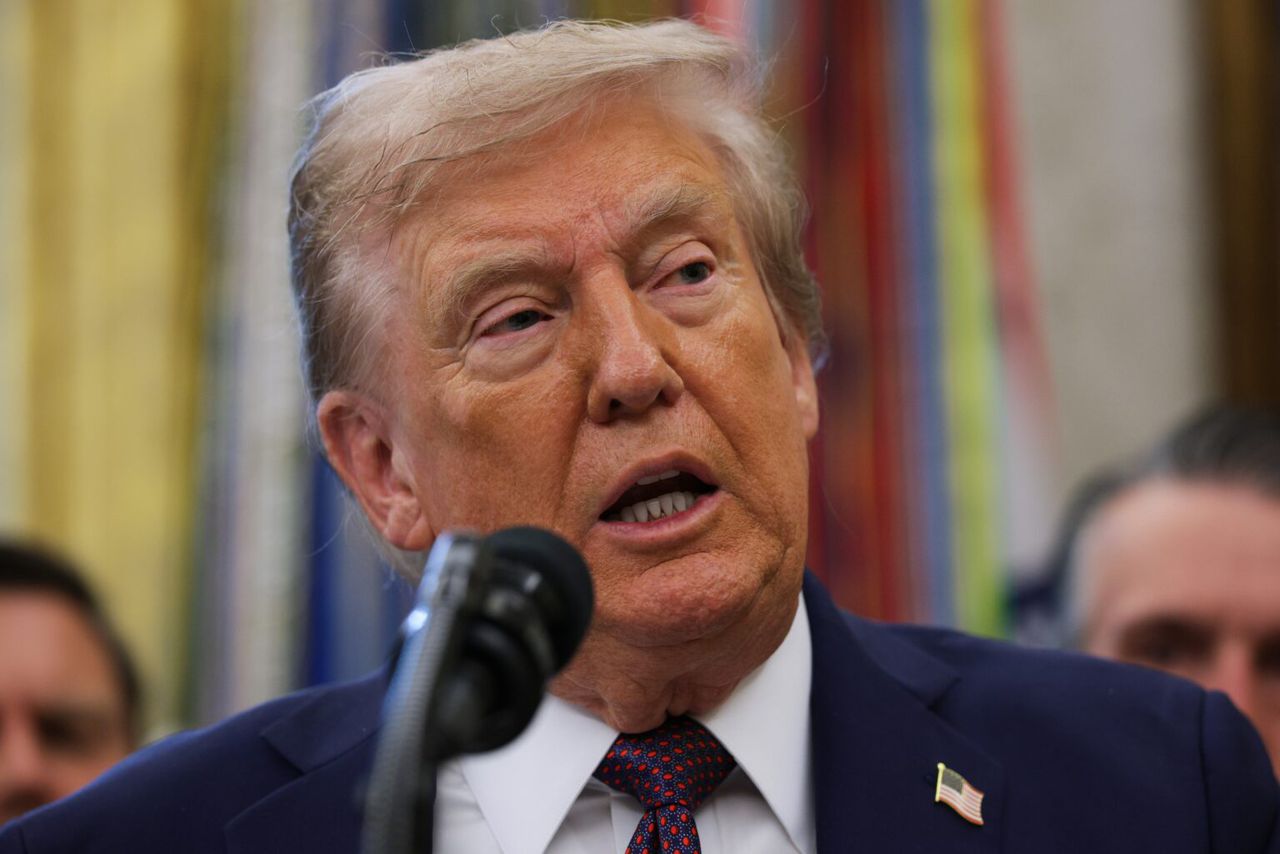
Speaking after the G7 Summit in Versailles, Trump confirmed that the agreement had been signed, while Iranian officials also announced that both governments had finalized the memorandum of understanding.
Attention is now focused on the Strait of Hormuz, a vital shipping corridor that handles roughly 20 percent of the world’s oil trade. The route had effectively been shut following the outbreak of hostilities between Iran, the United States and Israel earlier this year.
Pakistan, which played a key role in mediating the negotiations, stated that Iran would immediately restore access to the waterway while the United States would lift its naval restrictions in the region.
Under the terms of the agreement, Washington is expected to ease oil-related sanctions and support a $300 billion reconstruction initiative. In return, Tehran has agreed to reduce its stockpile of enriched uranium while broader negotiations continue toward a permanent settlement.
Oil markets responded swiftly to the announcement. Crude prices slipped by more than one percent on Thursday, adding to losses recorded earlier in the week. Benchmark contracts have now fallen by over 15 percent since speculation about a possible deal first emerged.
Market analysts said the accord has removed much of the risk premium previously built into oil prices amid fears of supply disruptions and restricted Gulf exports.
According to Stephen Innes of SPI Asset Management, the agreement significantly lowers concerns about blocked shipping routes and emergency drawdowns of oil reserves, factors that had driven prices sharply higher during the conflict.
Meanwhile, stock markets across Asia delivered mixed performances. Gains were recorded in Tokyo, Seoul, Singapore, Taipei and Manila, while Hong Kong, Shanghai, Sydney, Wellington and Jakarta closed lower.
Investor caution was partly linked to the latest policy decision from the US Federal Reserve, which left interest rates unchanged but indicated that tighter monetary policy could still be considered within the next six months.
The meeting marked the first under newly appointed Fed Chair Kevin Warsh, who reiterated the central bank’s commitment to restoring price stability amid persistent inflation.
Warsh noted that inflation has remained above the Federal Reserve’s two-percent target for several years and stressed the need to bring rising consumer prices under control.
His appointment followed repeated criticism of the central bank by President Trump, who had frequently attacked former Fed Chair Jerome Powell for not cutting interest rates aggressively enough.
Analysts observed that the Fed’s latest statement omitted language suggesting a bias toward future rate cuts, a shift from previous communications. Many also highlighted the greater emphasis placed on inflation risks rather than labour market concerns.
Recent economic data have shown inflation climbing to its highest level in three years, even as employment conditions remain relatively strong.
Gavin Friend of National Australia Bank said the Fed’s dual mandate remains unchanged, but financial markets increasingly believe policymakers are prioritising inflation control over employment considerations in the near term.
About The Author