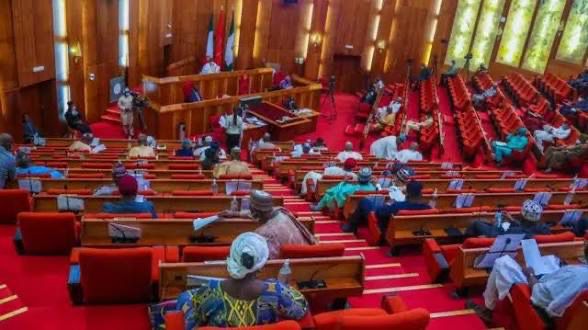
The Federal High Court in Lagos has struck down the National Assembly’s proposed N110 billion expenditure on lawmakers’ vehicles and allowances, ruling that the spending contravened procurement regulations, constitutional principles, and standards of public accountability.
In a judgment delivered on May 6, 2026, Justice Yellim Bogoro held that the planned N40 billion purchase of 465 vehicles for federal lawmakers, alongside N70 billion earmarked as support allowances for newly elected legislators, was inconsistent with the provisions of the Public Procurement Act, the Code of Conduct for Public Officers, and the constitutional oath of office.
READ MORE: Iyabo Obasanjo Resigns from APC, Cites Marginalisation and Lack of Respect
The case, identified as FHC/L/CS/1606/2023, was filed by the Socio-Economic Rights and Accountability Project (SERAP) against Senate President Godswill Akpabio and Speaker of the House of Representatives Tajudeen Abbas, who were sued in their capacities as leaders of the National Assembly.
As part of the ruling, the court directed both presiding officers to ensure that future spending and procurement activities undertaken by the legislature adhere strictly to due process and are guided by transparency, accountability, and value-for-money considerations.
According to the certified judgment obtained by SERAP, Justice Bogoro concluded that the enormous scale of the expenditure, coupled with the absence of evidence showing compliance with procurement procedures, rendered the transaction unlawful.
“The size of the expenditure, together with the lack of proof that due process was followed, makes the procurement arbitrary, excessive, and inconsistent with established procurement regulations,” the judge ruled.
The court also found that legislators approved expenditures from which they stood to benefit directly, describing the arrangement as a clear conflict of interest.
“The individuals authorising the expenditure are also its beneficiaries. The financial and material gains accruing from the spending amount to self-dealing and create a conflict of interest,” Justice Bogoro stated.
The judge further referenced the difficult economic conditions facing Nigerians, criticising the allocation of substantial public funds for lawmakers’ benefit at a time of widespread hardship.
“I take judicial notice of the severe economic challenges confronting citizens across the country. In such circumstances, dedicating N110 billion to legislators’ welfare demonstrates a failure to prioritise the broader public interest,” she observed.
Justice Bogoro dismissed arguments by the defendants that legislative spending decisions were protected from judicial review under the principle of separation of powers.
“The doctrine of separation of powers cannot be invoked to shield unlawful conduct. The court’s concern is whether the expenditure complies with the law and the Constitution,” she held.
The court also ruled that the expenditure violated the fiduciary obligations public officials owe to citizens.
“Public office is not a platform for personal gain. Officeholders are expected to act within constitutional limits and in good faith. The actions challenged in this suit are inconsistent with that obligation,” the judge added.
SERAP initiated the legal action in August 2023 after reports indicated that lawmakers intended to spend N40 billion on 465 bulletproof vehicles and allocate an additional N70 billion as support packages for newly elected members amid worsening economic conditions nationwide.
The organisation argued that the expenditure breached Section 57(4) of the Public Procurement Act 2007, the Code of Conduct provisions in the Fifth Schedule to the Constitution, and the constitutional oath of office.
In response, the National Assembly maintained that the expenditure had been properly appropriated and lawfully implemented. It also argued that the case had become academic and challenged SERAP’s legal standing to institute the suit, citing the absence of a pre-action notice.
However, the court rejected those objections, affirming SERAP’s right to pursue the matter in the public interest.
Justice Bogoro noted that public-interest organisations are entitled to seek judicial intervention where issues of transparency and accountability arise.
“Non-governmental organisations have the right to initiate actions aimed at protecting public interest. SERAP has demonstrated sufficient interest in matters concerning accountability and transparency,” she ruled.
The court also dismissed arguments relating to pre-action notice, finding that the urgency and public significance of the matter justified the proceedings.
On the substantive issues, the judge found that the defendants failed to produce evidence showing compliance with procurement requirements such as competitive bidding and value-for-money assessments.
“The defendants have not presented credible evidence demonstrating adherence to procurement procedures. The allegations were not specifically rebutted and are therefore deemed admitted,” she stated.
Justice Bogoro consequently declared that the expenditure violated both procurement laws and the Code of Conduct governing public officials.
“Whenever legislative actions conflict with constitutional or statutory provisions, the judiciary not only possesses jurisdiction but also bears a constitutional responsibility to intervene,” she ruled.
Reacting to the judgment, SERAP Deputy Director Kolawole Oluwadare described the ruling as a landmark victory for transparency and prudent management of public resources.
“This judgment represents a significant step forward for accountability, openness, and responsible public finance management in Nigeria,” he said.
According to him, the decision reinforces the principle that public office is held in trust for the people and that public resources must be managed in accordance with constitutional and legal standards.
He added that the ruling came at a crucial time when millions of Nigerians continue to grapple with poverty, insecurity, and economic hardship.
“Every naira lost to unlawful or wasteful spending is a naira unavailable for critical sectors such as healthcare, education, security, and social welfare,” Oluwadare noted.
Senior Advocate of Nigeria Femi Falana also welcomed the judgment, saying it highlighted the growing disconnect between public officials and ordinary citizens.
“SERAP deserves recognition for securing this victory. The judgment confirms that lavish spending by public officials while citizens struggle with poverty cannot be justified,” Falana stated.
He urged the Revenue Mobilisation Allocation and Fiscal Commission to fully implement its constitutional mandate regarding legislators’ salaries and allowances and called on the National Assembly to comply with the court’s decision.
In a letter dated June 6, 2026, addressed to Akpabio and Abbas, SERAP called on the leadership of both chambers to immediately enforce the court’s directives.
Oluwadare said prompt compliance would strengthen the rule of law and demonstrate commitment to transparency and accountability in the management of public funds.
The court ultimately granted three key reliefs sought by SERAP, including declarations that both the N40 billion vehicle procurement programme and the N70 billion allowance package violated constitutional and statutory provisions. It also ordered the National Assembly to ensure that future expenditures meet standards of due process, accountability, transparency, and value for money.
About The Author