File: NAN
President Bola Ahmed Tinubu on Tuesday led Nigeria’s delegation to the Africa Forward Summit in Nairobi, Kenya, where he called for stronger economic collaboration focused on Africa’s industrial growth and development.
The Africa-France Summit, jointly hosted by Emmanuel Macron and William Ruto, attracted leaders and top government officials from more than 30 countries to discuss Africa’s economic future and development agenda.
This was disclosed in a statement issued in Abuja by presidential spokesman Bayo Onanuga.
READ MORE: Union Bank bags award for outstanding SME banking support
Opening remarks at the summit were delivered by Antonio Guterres and Mahamoud Youssouf.
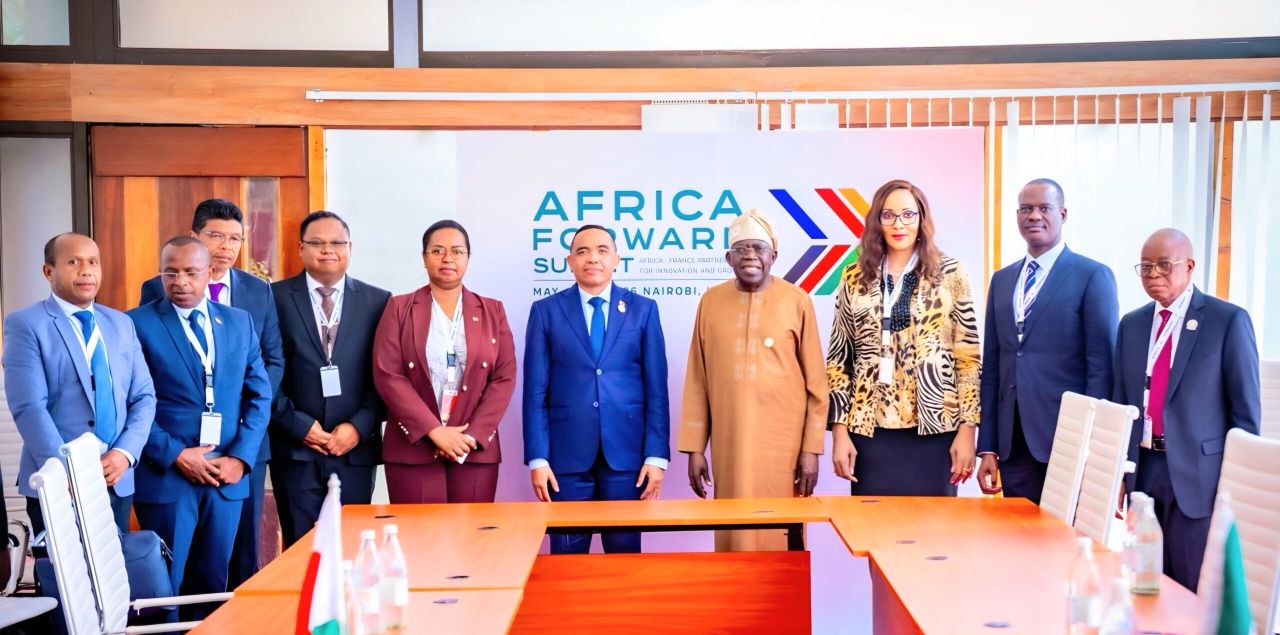
On the sidelines of the event, Tinubu met with Madagascar’s President, Michael Randrianirina, during a bilateral engagement.
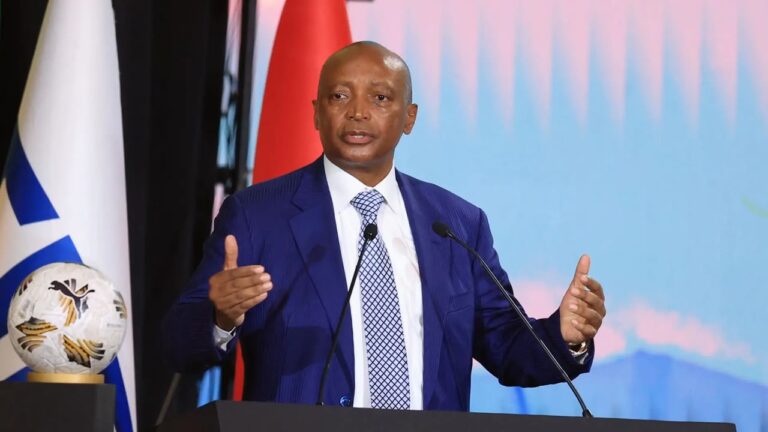
He also held talks with Patrice Motsepe, assuring him of Nigeria’s preparedness to host the 2026 CAF Awards.
During discussions at the summit, the French government pushed for a new model of engagement with Africa built on fairness and mutual respect, while African leaders stressed the need for easier access to affordable development financing.
Tinubu highlighted Nigeria’s blue economy as a major driver of Africa’s economic progress, noting that insecurity and instability had discouraged investments in maritime activities and ocean-based industries.
The president announced that Nigeria would strengthen regional maritime cooperation by making the country’s Deep Blue Project intelligence infrastructure available as a shared data platform for interested Gulf of Guinea nations.
According to him, harmonised laws, integrated systems and coordinated enforcement strategies are necessary for effective regional maritime security.
He added that secure shipping routes, stable regulations and efficient judicial systems are critical to attracting private investment into Africa’s maritime sector.
Tinubu further stated that Nigeria would continue pursuing climate-friendly port reforms and digital transformation within the maritime industry.
He urged African countries to move from what he described as “sea blindness” to “ocean sovereignty,” stressing that the continent’s oceans must be protected through stronger institutions, legal systems and regional collaboration.
Speaking on global financial reforms, Tinubu argued that the current international financial structure would lose relevance if it failed to address inequalities affecting developing countries, especially African economies seeking industrial growth.
He observed that Africa contributes less than two per cent of global manufacturing because the continent mainly exports raw materials while importing finished products.
The president blamed restrictive policies, illicit financial flows and limited access to affordable funding for slowing Africa’s industrial development.
Tinubu said Nigeria had implemented difficult but important economic reforms, including fuel subsidy removal, exchange rate harmonisation and a banking recapitalisation programme worth over 45.5 billion dollars to restore investor confidence and strengthen the economy.
Despite the reforms, he lamented that African nations still faced extremely high borrowing costs, revealing that Nigeria is projected to spend about 11.6 billion dollars on debt servicing in 2026.
He questioned how African manufacturers could compete globally when financing costs on the continent remain significantly higher than those in Europe, Asia and North America.
Tinubu insisted that Africa was not asking for charity but demanding a fair financial system that would allow African countries to refine crude oil, process minerals, manufacture pharmaceuticals and compete effectively in global markets.
On migration issues, the president said African governments and development partners must focus on tackling the root causes of irregular migration by investing in infrastructure, agriculture, energy, digital skills and job creation.
He urged international partners to allocate part of their development assistance toward programmes capable of reducing poverty and hopelessness among young people.
According to him, people with jobs, security and opportunities are less likely to embark on dangerous migration journeys.
Tinubu also called for stronger African cooperation in shaping global migration policies, while backing the African Union Migration Policy Framework and the Khartoum Process.
The president attended the summit alongside ministers, senior government officials and leading Nigerian business figures, including Aliko Dangote, Abdulsamad Rabiu, Tony Elumelu and Aigboje Aig-Imoukhuede.
Government ministers also participated in plenary sessions and bilateral engagements during the summit.
NAN
About The Author