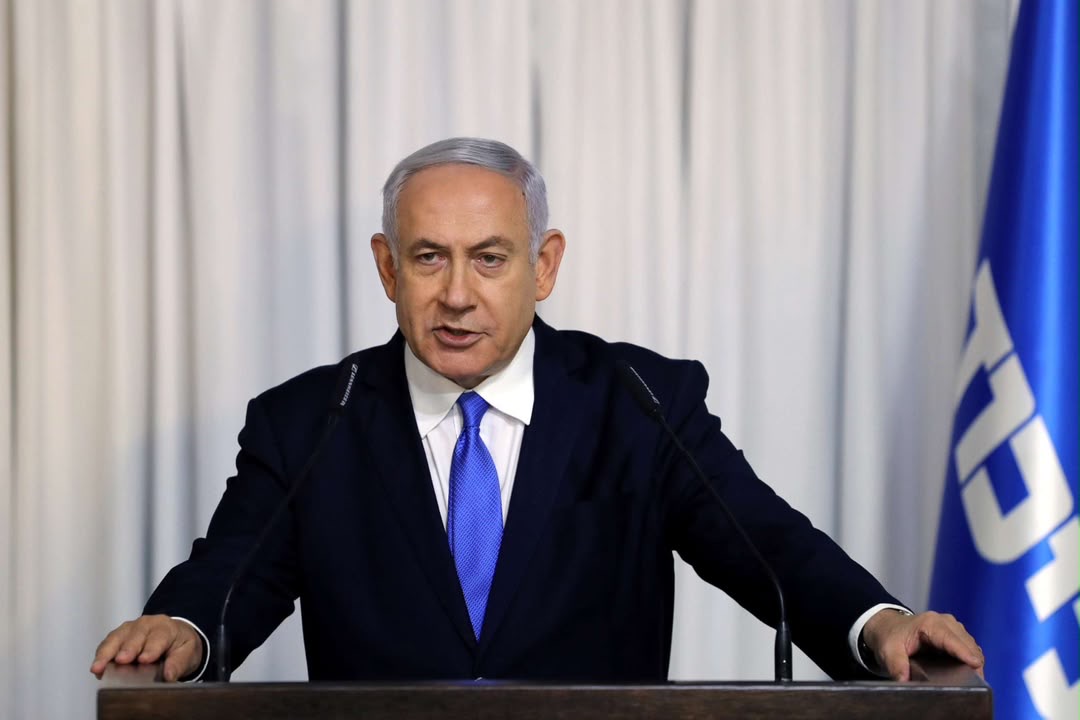
Israeli Prime Minister Benjamin Netanyahu is scheduled to meet with U.S. President Donald Trump at the White House on Tuesday in their first face-to-face talks since the outbreak of the Iran conflict, despite recent public disagreements between the two leaders.
Although their relationship has shown signs of tension in recent months, both Netanyahu and Trump have sought to play down reports of a rift.
READ MORE: Bode George, Akerele-Bucknor, Others Mark 20th Anniversary of Funsho Williams’ Death
The discussions are expected to focus largely on the conflict with Iran, which escalated after joint U.S.-Israeli military strikes in late February. While Washington has indicated its preference for renewed diplomatic engagement, Israel has stayed out of the latest round of fighting between the United States and Iran that erupted earlier this month following the collapse of an April ceasefire.
Tuesday’s meeting will mark the eighth encounter between Trump and Netanyahu since the U.S. president returned to office last year and their first in-person meeting since the Iran war began.
Before departing Israel on Monday, Netanyahu described the visit as both an honour and a significant responsibility.
“We will address every major issue before us, with Iran at the top of the agenda. Our objective remains to protect Israel’s security while expanding opportunities for peace across the region,” he said.
After arriving in Washington, Netanyahu attended a private memorial dinner on Monday evening in tribute to the late Senator Lindsey Graham, according to his office. He is also expected to participate in Graham’s memorial service on Tuesday.
Relations between the two leaders reached one of their lowest points in April during negotiations over an Iran ceasefire, when Trump publicly criticized Netanyahu in strongly worded remarks. In a later interview, the U.S. president referred to the Israeli leader as “a very difficult guy.”
Netanyahu dismissed the exchanges as nothing more than “tactical disagreements,” insisting that both governments remain united in their broader strategic objectives.
In addition to Iran, the leaders are expected to review the implementation of the U.S.-backed agreement signed last month between Israel and Lebanon, which has encountered challenges during its rollout.
The meeting is also likely to include discussions on Gaza, where efforts to advance reconstruction have stalled despite ongoing diplomatic initiatives. Nearly three years after the Israel-Hamas war began, humanitarian conditions in the Palestinian territory remain severe, while Israel continues military operations targeting individuals it identifies as militants.
Focus on Regional Unity
Yonatan Freeman, an international relations expert at the Hebrew University of Jerusalem, said one of the key purposes of Netanyahu’s visit is to counter speculation that ties between Washington and Jerusalem have weakened.
According to Freeman, the meeting is intended to send a clear signal to Iran, Lebanon and the wider international community that the alliance between the United States and Israel remains intact despite occasional policy differences.
He argued that the two leaders agree on their overall strategic goals, with any disagreements centered mainly on operational matters such as timing, military intensity and immediate priorities rather than long-term objectives.
Freeman also suggested that Trump is likely to concentrate on two major regional goals—containing Iran and expanding the Abraham Accords—while placing less emphasis on developments in Gaza.
The Abraham Accords, brokered by the United States during Trump’s first term, established diplomatic relations between Israel and several Arab nations, including the United Arab Emirates, Bahrain and later Morocco.
However, some analysts believe the talks could also explore the possibility of reducing Israel’s military footprint in parts of the region, including Lebanon, Syria and Gaza.
Netanyahu’s Washington visit comes as Israel prepares for national elections in the coming months, where he is expected to seek another term in office.
Recent opinion polls indicate that the prime minister faces growing political challenges, with many Israelis continuing to criticize his administration over its failure to prevent Hamas’ October 7, 2023 attack, an event that triggered the ongoing war in Gaza.
About The Author