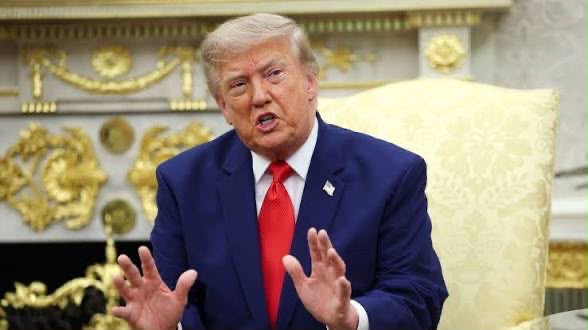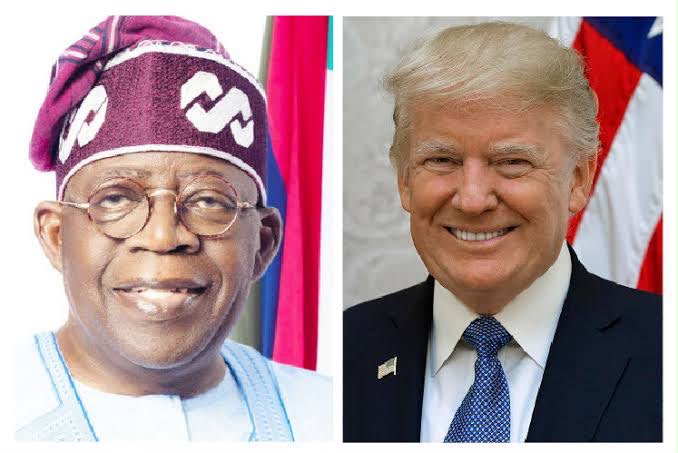
Opposition political parties have criticised the Presidency for celebrating a reported letter of commendation from United States President Donald Trump to President Bola Tinubu over efforts to combat insecurity, with several leaders questioning the authenticity of the correspondence.
While some opposition figures dismissed the reported message as having little relevance to Nigeria’s prevailing security situation, others argued that any praise from the U.S. president should be viewed strictly within the context of counter-terrorism efforts.
READ MORE: FG Constitutes Committee to Overhaul VAT Framework
Their reactions followed the Presidency’s announcement that Trump had written to Tinubu, applauding what it described as his “decisive leadership” in addressing insecurity. The Presidency also disclosed that the United States had deployed Special Operations Forces, including Navy SEAL Team 6, to provide training and operational support to the Nigerian military in its fight against terrorism.
Despite this, several opposition leaders questioned both the authenticity and significance of the reported letter, insisting that it should not be interpreted as a broad endorsement of the Tinubu administration’s overall management of the country’s security challenges.
The National Publicity Secretary of the Nigeria Democratic Congress, Osa Director, dismissed the Presidency’s excitement over the reported correspondence, arguing that Nigerians would ultimately judge the administration based on the realities they experience daily.
He said it was disappointing for the government to celebrate diplomatic gestures instead of focusing on the country’s security situation.
“When it comes to diplomacy, leaders often use language that avoids causing offence. Even if the Tinubu administration receives a thousand commendation letters from foreign governments, what truly matters is the actual condition of the country.
“It is clear that Nigerians are dissatisfied. The security situation has not improved to the point where the President deserves praise. Whether the letter came from Trump, the European Union or any other source, it does not reflect the realities on the ground,” Director said.
He further lamented that insecurity continues to limit the movement of citizens across the country, adding that any recognition of Tinubu’s achievements should come from Nigerians rather than from a foreign leader.
“I never imagined we would get to the point of celebrating a letter from the President of the United States, or anywhere else, over what is being presented as success against insecurity that many Nigerians do not see. Everyone knows the security challenges remain severe and are not deserving of commendation,” he added.
The National Coordinator of the Obidient Movement Worldwide, Dr. Yunusa Tanko, also cast doubt on the authenticity of the reported letter.
“I don’t know whether President Trump has been misinformed. The United States has its own intelligence capabilities and can independently verify situations.
“We only hope this report was not fabricated because there is hardly anything this government cannot do. That is my concern,” he said.
The National Chairman of the New Nigeria People’s Party, Major Agbo, said conflicting reports had left him uncertain about whether the letter actually existed and what it contained.
“I first read reports claiming that Trump had commended the President for his efforts in tackling insecurity. But shortly afterward, I came across another report suggesting that no such statement existed.
“So I’m left wondering whether there was truly a letter, whether there was none at all, or whether the contents are different from what is being presented to Nigerians. The entire issue has become confusing.
“The government should simply clarify whether such a letter exists. That is the proper thing to do,” he said.
On the other hand, the National Publicity Secretary of the Labour Party, Ken Asogwa, argued that Trump’s reported remarks should be interpreted only within the context of terrorism and attacks on Christian communities, rather than as an assessment of Nigeria’s overall security situation.
According to him, while there may have been progress in tackling terrorism and the killing of Christians, the country still faces a wide range of security threats.
“I believe Donald Trump’s comments, if accurately reported, specifically referred to terrorism and attacks on Christians, indicating that there has been some improvement in that area.
“I do not think the reported letter was intended to assess Nigeria’s entire security landscape because insecurity in the country is far more complex. It extends beyond terrorism or attacks on Christians.
“The banditry witnessed in the North-West is different from the violence experienced in Benue and Plateau in the North-Central,” he said.
Asogwa explained that Nigeria’s security challenges differ from one region to another, pointing to banditry in the North-West, attacks in Benue and Plateau, insurgency in the North-East, and violent unrest in the South-East.
The opposition’s reactions add to the growing criticism of the Presidency’s handling of the reported correspondence.
On Thursday, the African Democratic Congress maintained that the letter, if genuine, was simply a diplomatic communication rather than an endorsement of Tinubu’s administration, stressing that Nigerians would assess the President based on his performance in tackling insecurity, improving the economy and enhancing living standards.
The Allied People’s Movement also accused the Federal Government of misrepresenting the contents of the reported letter, insisting that Trump merely acknowledged Tinubu’s commitment to combating terrorism and not any measurable achievements.
Likewise, former Deputy National Publicity Secretary of the All Progressives Congress, Timi Frank, described the correspondence as a routine diplomatic exchange that should not be interpreted as political support or a vote of confidence in the Tinubu administration.
The Presidency, however, has maintained that the reported letter reflects the strengthening partnership between Nigeria and the United States in combating terrorism, particularly through American military assistance and cooperation with Nigerian security agencies.
About The Author