The World Bank has confirmed plans to gradually discontinue lending to China by 2031 under its newly approved Country Partnership Framework (CPF) for the world’s second-largest economy.
The decision, which was first reported by AFP last month, forms part of the institution’s long-term strategy for its relationship with Beijing.
READ MORE: Court Sentences Three to Life Imprisonment Over Oyo School Kidnapping
In a statement published on Thursday, the World Bank Group (WBG) said lending through the International Bank for Reconstruction and Development (IBRD) would continue to decline during the five-year CPF period and would not exceed $2 billion.
The Country Partnership Framework serves as a jointly agreed roadmap between the World Bank and a member country, outlining key development priorities over several years.
According to the bank, China is not expected to seek additional IBRD financing once the current CPF comes to an end in 2031.
The World Bank said the new five-year framework signals a fresh chapter in its 45-year partnership with China, reflecting the country’s transition from a borrower requiring financial support to one that increasingly benefits from technical expertise, innovation and knowledge exchange.
World Bank Managing Director of Operations Anna Bjerde said the institution’s evolving partnership with China would place greater emphasis on sharing ideas, innovation and practical solutions rather than traditional lending.
She noted that as China addresses issues such as an ageing population, economic restructuring and other development challenges, the collaboration could generate valuable lessons for emerging economies worldwide.
Over the past several years, World Bank financing for China has steadily declined as the country’s rapid economic expansion and significant reduction in poverty lessened its dependence on development loans.
China’s Deputy Finance Minister, Liao Min, said Beijing remains committed to strengthening cooperation with the World Bank despite the gradual reduction in borrowing.
Under the new five-year agreement, both parties will focus on promoting sustainable economic growth, expanding employment opportunities, strengthening social resilience and supporting the transition to a low-carbon economy.
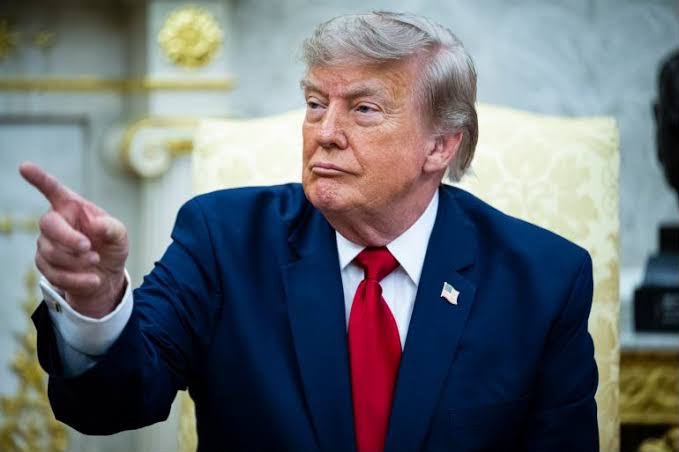
During his first term in office, US President Donald Trump repeatedly urged the World Bank to stop lending to China altogether as part of his tougher stance toward Washington’s main economic competitor.
Although Trump has maintained a similarly firm position during his second term, he has not publicly renewed that specific demand.
World Bank lending to China reached a high of $2.42 billion in 2017 before dropping significantly to $750 million by 2025.
Despite receiving fewer loans, China remains an important financial contributor to the World Bank’s International Development Association (IDA), which supports the world’s poorest countries. Under the latest funding round, Beijing pledged $1.5 billion, making it the fifth-largest contributor to the programme.
AFP
About The Author