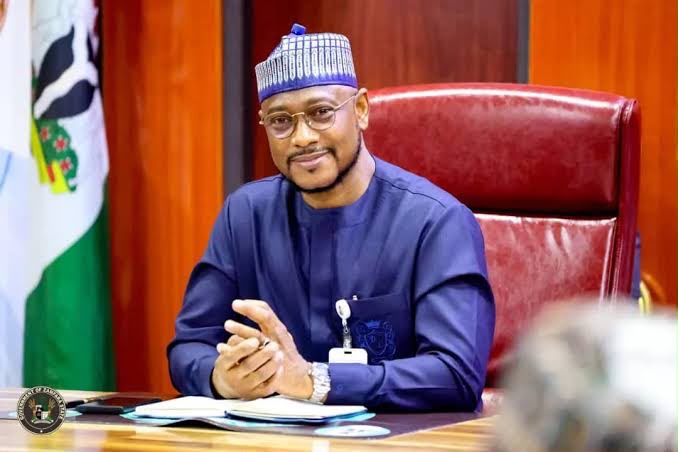
Zamfara State Governor, Dauda Lawal, has disclosed that he refused to pay a ₦300 million ransom after his brothers were abducted in 2019, maintaining that paying kidnappers only fuels further criminal activities.
Speaking on Thursday at the ARISE News and THISDAY Townhall Conference in Abuja, the governor said he remained firm in his decision despite the personal impact of the incident.
READ MORE: Six Alleged ISWAP Members, Families Surrender to Troops in Borno
Recounting the ordeal, Lawal said the abductors demanded ₦300 million for the release of his brothers, but he rejected the request outright.
“My brothers were kidnapped in 2019, and the kidnappers demanded about ₦300 million. I told them I would not pay a single naira. If they wanted to kill them, they could go ahead,” he said.
According to the governor, the kidnappers eventually freed his brothers after they spent three months in captivity without receiving any ransom.
Lawal argued that paying ransom only strengthens kidnapping networks and encourages more abductions across the country.
“As long as people continue paying ransom, these criminals will keep kidnapping innocent citizens. If they know there is no financial reward, they will begin to reconsider,” he stated.
The governor reiterated that his position remains unchanged, insisting that he would never negotiate with or pay money to criminals under any circumstance.
“I will not negotiate with criminals, and I will never pay ransom, regardless of the situation,” he declared.
Lawal made the remarks while advocating for the establishment of state police, stressing that governors should have operational authority over security within their states if they are expected to be accountable for protecting lives and property.
He expressed frustration over being referred to as the state’s chief security officer without having the power to direct security agencies.
“Although I am called the chief security officer of the state, I do not have the command structure to instruct or control the security agencies operating here,” he explained.
The governor argued that security is the foundation of development and questioned how state governors could be blamed for insecurity when they lack direct control over policing.
“My foremost responsibility is safeguarding lives and property, yet I don’t have the authority needed to carry out that responsibility. So how can I be held accountable?” he asked.
He maintained that creating state police would make governors directly answerable for security outcomes while allowing states to properly fund, equip and train their security personnel.
Lawal also pointed to challenges facing the Nigeria Police Force, including inadequate funding, poor welfare and limited training, saying these issues undermine officers’ effectiveness.
To demonstrate Zamfara’s commitment to security, he revealed that the state currently finances more than 30 percent of security operations.
According to him, his administration has acquired over 500 operational vehicles for security agencies within the past three years and recently supplied 35 Armoured Personnel Carriers (APCs) and Mine-Resistant Ambush Protected (MRAP) vehicles to strengthen ongoing operations.
The governor further disclosed that the state has invested in both surveillance and combat drones to support security agencies in tackling banditry and other violent crimes.
He emphasized that improving security through better funding, training, modern equipment and technology offers a more sustainable solution than negotiating with criminal groups.
Lawal’s comments come amid increasing national discussions on the creation of state police and wider security reforms, with supporters arguing that decentralising policing would enhance accountability and enable faster responses to local security challenges.
About The Author