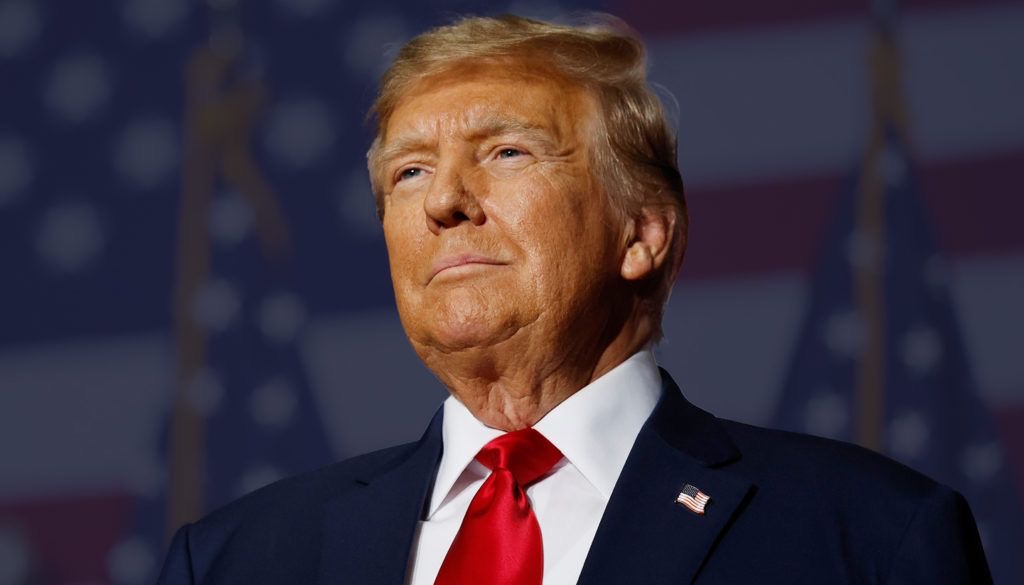
The US Supreme Court on Tuesday dismissed President Donald Trump’s attempt to limit birthright citizenship, delivering a significant ruling on the final day of its current term.
In a 6-3 decision, the justices upheld the constitutional principle that nearly everyone born on American soil automatically acquires US citizenship.
READ MORE: Third Batch of Evacuated Nigerians Returns to Lagos from South Africa
Trump had signed an executive order on the first day of his second term in office, seeking to deny automatic citizenship to children born in the United States to parents who were either in the country unlawfully or staying on temporary visas.
Several lower courts quickly blocked the order, concluding that the Citizenship Clause of the 14th Amendment guarantees citizenship to almost all individuals born within the United States.
Writing for the majority, Chief Justice John Roberts affirmed that interpretation.
“Children born in the United States to parents who are unlawfully or temporarily present are subject to the jurisdiction of the United States and are citizens at birth under the Citizenship Clause of the Fourteenth Amendment,” Roberts wrote.
In a rare move for a sitting US president, Trump attended the Supreme Court’s oral arguments on the issue in April.
He remained in the courtroom during arguments presented by Solicitor General John Sauer, who defended the administration’s position, but left before American Civil Liberties Union (ACLU) lawyer Cecillia Wang argued in support of preserving birthright citizenship.
Trump’s effort to eliminate birthright citizenship formed part of his broader immigration agenda, which also included plans for the large-scale removal of undocumented immigrants.
During the hearing, Sauer argued that automatic citizenship encourages illegal immigration and promotes “birth tourism,” where foreign nationals travel to the United States specifically to give birth so their children receive American citizenship.
The 14th Amendment declares that “all persons born or naturalized in the United States, and subject to the jurisdiction thereof, are citizens of the United States.”
However, the amendment excludes individuals who are not under US jurisdiction, such as children born to foreign diplomats.
The Trump administration maintained that the amendment, adopted after the Civil War, was originally intended to secure citizenship rights for formerly enslaved people and was not meant to apply to children of undocumented immigrants or temporary visitors.
Based on that interpretation, Trump’s executive order argued that people living in the United States without legal status or on temporary visas are not fully “subject to the jurisdiction” of the country and therefore their children should not automatically receive US citizenship.
The Supreme Court rejected that argument, relying on its longstanding precedent established in the landmark 1898 case involving Wong Kim Ark.
Wong Kim Ark, who was born in San Francisco in 1873 to Chinese immigrant parents, was denied reentry into the United States in 1895 after visiting China under the Chinese Exclusion Acts.
The Supreme Court ultimately ruled that he was an American citizen because he had been born on US soil, setting a precedent that has guided birthright citizenship ever since.
The ruling marks Trump’s third major legal setback before the Supreme Court during the current term. Earlier this year, the justices invalidated most of his global tariff policy in February, and on Monday they also blocked his attempt to remove Federal Reserve Governor Lisa Cook from office.
About The Author